Who Needs a 40 Year Building Recertification in Miami-Dade County in 2026?
Buildings age just like people. Walls crack. Wires wear out. Pipes rust. Roofs take a beating from the sun and storms. In Miami-Dade County, safety is not a guessing game. It is the law. Owners must follow rules for 40-year building recertification in Miami-Dade County to keep people safe and structures strong.
If your commercial or condominium building in Miami-Dade County was constructed in 1986, 2026 may mark its 40-year milestone. Under Miami-Dade County requirements, certain buildings must undergo structural and electrical recertification at 40 years, and every 10 years thereafter. Understanding whether your property qualifies — and preparing early — can help you avoid delays, violations, or unexpected costs.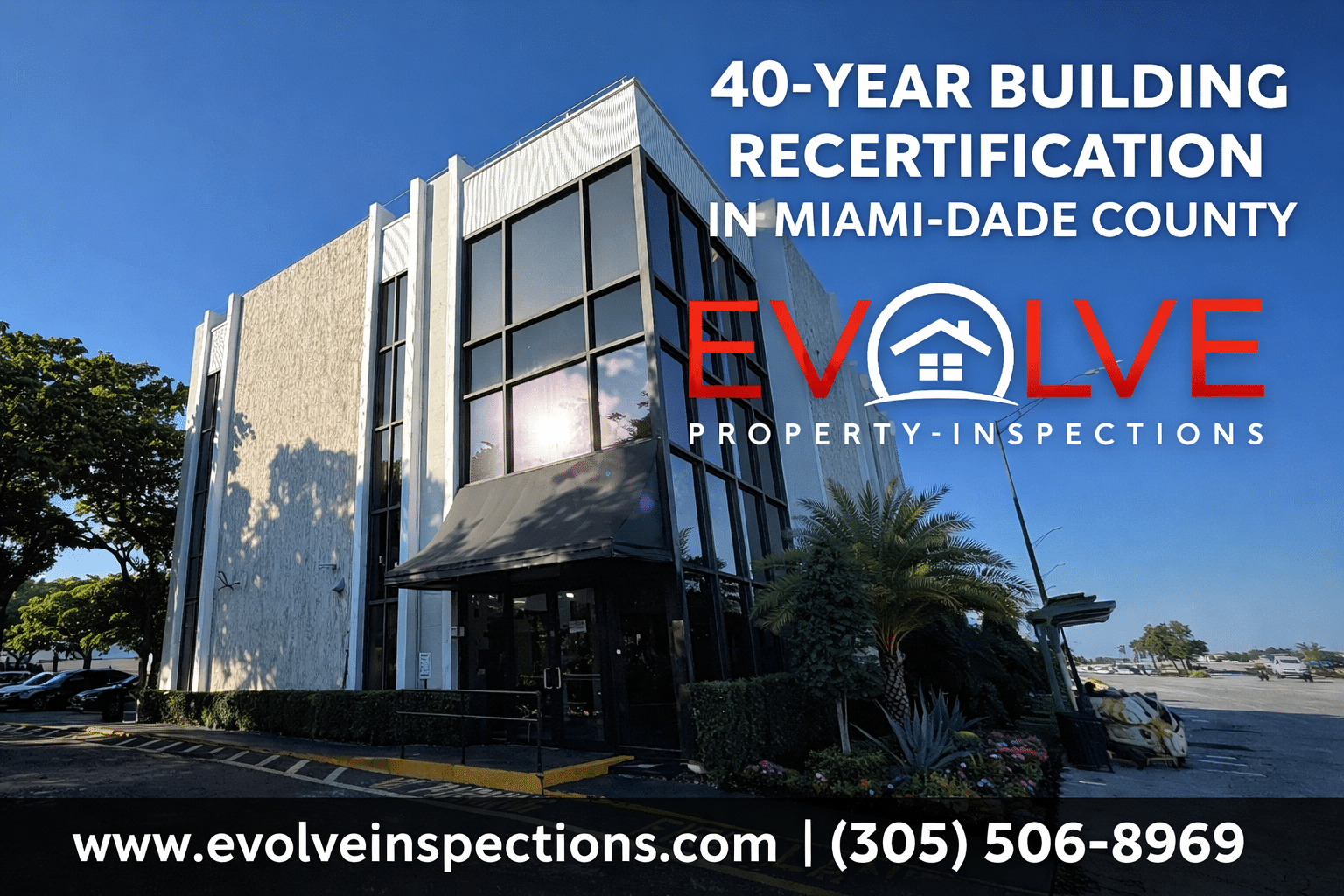
What is a 40 Year Building Recertification?
The county requires certain buildings to go through a full safety check once they hit 40 years. After that, inspections repeat every 10 years.
This process reviews two major systems:
- Structural components
- Electrical system
Engineers and certified inspectors check if the building remains safe for use. If problems show up, repairs must follow. The goal is simple. Protect lives. Protect property.
Who Needs a 40 Year Building Recertification in Miami-Dade County in 2026?
Not every property falls under this rule. However, several types do.
Commercial Property Owners
If you own:
- Office buildings
- Shopping centers
- Warehouses
- Mixed-use buildings
And your structure turns 40 years old in 2026, you must complete the inspection process. The same applies for Miami Dade county 50 year building recertification if your building has already passed the first milestone.
Condominium Associations
Condo buildings often fall under recertification laws. If your condo reaches 40 years in 2026, the board must arrange inspections. After that, inspections repeat every decade.
Multi-Family Residential Buildings
Apartment complexes with multiple units may also qualify. Age and size matter. Owners must verify eligibility and act before deadlines hit.
Why the County Take This So Seriously?
South Florida weather is tough. Heat, humidity, and salt air eat away at materials. Over time:
- Concrete can crack
- Steel can corrode
- Electrical panels can fail
Small issues grow fast. Recertification spots trouble early. Think of it like a yearly health checkup, but for buildings.
Ignoring the process can lead to fines, legal action, and even unsafe living conditions. No owner wants that headache.
What Does the Inspection Cover?
Evolve Property Inspections follows county guidelines with care and precision.
Structural Review
Inspectors look at:
- Foundation
- Load-bearing walls
- Beams and columns
- Balconies and railings
- Roof framing
They check for cracks, movement, water damage, and signs of stress.
Electrical Inspection
The team reviews:
- Main service panels
- Wiring systems
- Grounding
- Safety compliance
Electrical failure can spark fires. Proper inspection lowers risk. If repairs are needed, the county requires completion before certification approval.
Why Choose Evolve Property Inspections?
Recertification is not just paperwork. It demands real expertise. Evolve Property Inspections brings serious credentials to the table.
The company is led by Humberto Suarez, who holds:
Certified Master Inspector designation
CCPIA Certified Commercial Property Inspector certification
Electrical Thermography Level II and Level III training
Licensed Florida Home Inspector license
Licensed Mold Assessor and Mold Remediator credentials
Thermal imaging plays a huge role. Hidden electrical hot spots and moisture issues often escape the naked eye. With advanced tools, Evolve finds problems before they turn ugly.
Experience matters. Knowledge matters. And clear communication matters most.
What Happens If You Miss the Deadline?
Deadlines are not flexible. Once notified, property owners must:
- Hire a qualified inspector
- Submit required reports
- Complete repairs
- Obtain final approval
Failure to comply can bring:
- Daily fines
- Building violations
- Unsafe structure notices
The county can escalate enforcement if needed. No one wants their property flagged as unsafe.
Planning for Miami-Dade County 50 Year Building Recertification
If your building already completed the first cycle, you must prepare for Miami-Dade County 50 year building recertification and future 10-year renewals.
Smart owners plan early. Budget for repairs. Keep maintenance records organized. Schedule inspections before the clock runs out. Preparation reduces stress and avoids last-minute panic.
Why 2026 Is Important?
Buildings constructed in 1986 will hit 40 years in 2026. Owners of those properties must prepare now. Waiting until the last minute creates delays and contractor backlogs.
By scheduling a 40-year building recertification in Miami-Dade County early, owners avoid bottlenecks and rushed repairs.
Stay Ahead and Protect Your Investment
At Evolve Property Inspections, we provide detailed structural and commercial inspection services designed to support building owners, associations, and investors throughout the recertification process. Led by Certified Master Inspector Humberto Suarez, CCPIA, we bring advanced building expertise and infrared diagnostic capabilities to every inspection.
Contact Evolve Property Inspections today and schedule your recertification inspection.
Evolve Property Inspections — Inspecting Your American Dream.
FAQs
Q1. How do I know if my building qualifies for recertification?
Ans: Check the construction year on your property records. If the building turns 40 years old, the county will likely send a notice. Commercial and multi-unit properties usually qualify. Contact a certified inspection company to confirm your eligibility and deadline requirements.
Q2. What is included in Miami-Dade County 50-year building recertification?
Ans: The process includes structural and electrical inspections similar to the 40-year review. Inspectors assess safety, code compliance, and system integrity. After the 50-year mark, inspections continue every 10 years to maintain building safety and county compliance standards.
Q3. How long does the inspection process take?
Ans: Inspection timelines depend on building size and condition. Smaller properties may take a few days. Larger commercial structures may require more time. If repairs are needed, completion time varies based on scope and contractor availability.
Q4. Can I stay open during recertification?
Ans: Yes, most businesses remain open during inspections. Inspectors work around tenants and operations when possible. However, repair work may require limited access to certain areas for safety reasons.
Q5. What happens after repairs are completed?
Ans: After repairs, inspectors submit updated reports to the county. Once approved, the building receives recertification clearance. Owners must keep documentation for future review cycles and compliance checks.