What Are the Differences Between 50 Year Building Recertification and Regular Inspections?
Buildings age just like people. Small cracks, worn wires, and tired systems start to show up with time. In South Florida, safety rules keep a close eye on older structures. One big rule is Miami Dade county 50 year building recertification. This process checks if a building still stands strong and safe. At the same time, regular inspections play a role in day-to-day care. Both sound similar, yet they serve very different goals.
Let’s break it down in a clear and simple way so you can see what sets them apart.
What Is a 50 Year Building Recertification?
A 50-year recertification is a legal safety check. It applies to buildings once they reach a certain age. In Miami-Dade County, this includes both 40-year and 50-year milestones.
This process focuses on two main systems:
- Structural condition
- Electrical system safety
Licensed engineers carry out the inspection. They review key parts like beams, columns, wiring, and panels. After inspection, a sealed report gets submitted to the county.
Evolve Property Inspections ensures sealed reports are issued by licensed Florida Professional Engineers working with the firm. This keeps everything compliant and ready for review.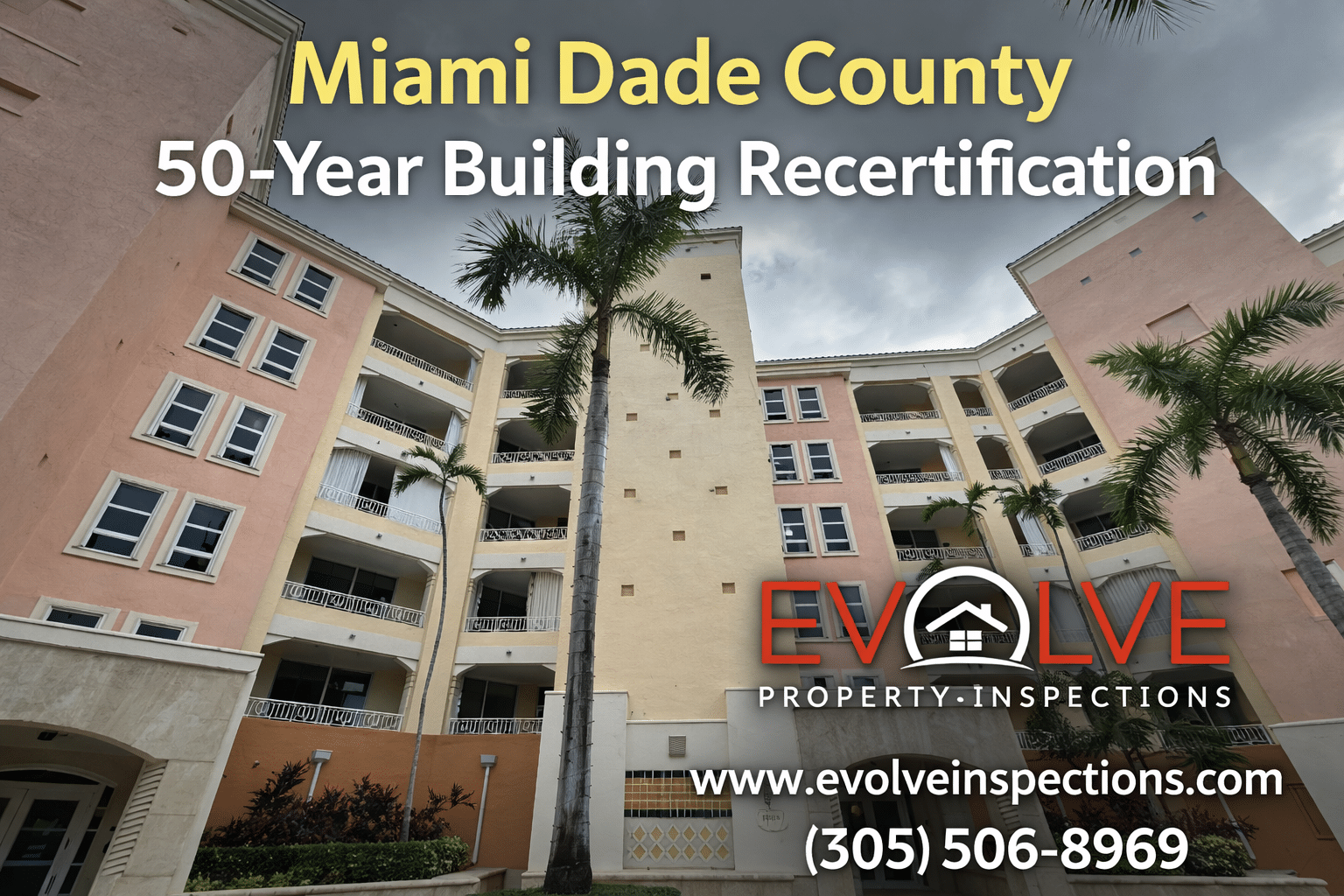
What Are Regular Inspections?
Regular inspections are more flexible. Property owners schedule them for routine checks. These inspections look at the general condition and help spot issues early.
Unlike recertification, regular inspections are not always tied to strict legal deadlines. They help maintain value, prevent damage, and support long-term planning.
You can think of them as routine checkups, while recertification feels more like a required exam.
Key Differences You Need to Know
Understanding the gap between these two can save time, money, and stress:
Purpose and Goal
-50 year recertification focuses on compliance and public safety. It is mandatory. Local authorities require it.
-Regular inspections focus on upkeep. They help owners stay ahead of repairs.
Timing and Frequency
-Recertification happens at fixed milestones like 40 or 50 years. After that, it repeats every 10 years.
-Regular inspections follow no strict rule. Owners can schedule them yearly or as needed.
Scope of Inspection
-Recertification checks core systems like structure and electrical safety. It digs deep into critical areas.
-Regular inspections cover a wider range but at a lighter level. They may include plumbing, roofing, HVAC, and general wear.
Reporting Requirements
-Recertification requires an official sealed report. Engineers must sign and certify findings.
-Regular inspections provide detailed reports, too, but they do not need a sealed engineering certification.
Legal Impact
-Failing recertification can lead to fines or even building closure.
-Regular inspections carry no legal penalty if skipped. Still, ignoring them can lead to bigger issues later.
Why Both Inspections Matter?
Skipping either one can create problems. Each serves its own role.
- Recertification keeps your building compliant with county rules
- Regular inspections help avoid surprise repairs
- Together, they protect both safety and investment
- They support long-term planning and peace of mind
In Miami-Dade, rules are strict for a reason. Weather, salt air, and age take a toll. Keeping up with 40-year building recertification in Miami-Dade County and 50-year requirements ensures buildings stay safe for everyone inside.
How Evolve Property Inspections Supports You?
Evolve Property Inspections brings deep experience and strong leadership. The firm is led by Humberto Suarez, a trusted name in the field.
His credentials include:
- Certified Master Inspector
- CCPIA Certified Commercial Property Inspector
- Electrical Thermography Level II and Level III
- Licensed Florida Home Inspector
- Licensed Mold Assessor
- Licensed Mold Remediator
This level of expertise means every inspection follows high standards. The team knows local codes, understands building systems, and delivers clear reports.
When handling Miami Dade county 50 year building recertification, the company works closely with licensed engineers. Sealed reports meet county requirements and help move the process forward without delays.
Regular inspections from the same team give property owners a full picture. You get clarity, not confusion.
Common Mistakes Property Owners Make
A few slip-ups can slow things down or cost extra money:
- First, waiting too long to start recertification. Deadlines come fast, and delays can lead to penalties.
- Second, confusing regular inspections with recertification. One cannot replace the other.
- Third, hiring unqualified inspectors. Certification and licensing matter, especially for compliance work.
Staying informed helps avoid these issues.
Final Thoughts
Both inspection types play key roles in building care. Recertification keeps you in line with local law. Regular inspections keep your property in good shape day by day.
If your building is nearing the required age, now is the right time to act. With expert guidance and proper planning, the process stays smooth and stress-free.
Get Expert Help Today
Evolve Property Inspections stands ready to guide you through every step. From routine checks to full 40-year building recertification in Miami-Dade County, the team delivers reliable results you can trust.
Reach out today and schedule your inspection. Keep your building safe, compliant, and ready for the future.
FAQs
1. What triggers a 50 year building recertification in Miami-Dade County?
Once a building reaches 40 or 50 years of age, local rules require inspection. Authorities send a notice to the property owner. From there, owners must hire licensed professionals to inspect the structure and electrical systems and submit sealed reports within the given timeline.
2. Can a regular inspection replace a recertification inspection?
No, both serve different purposes. Regular inspections help with upkeep and maintenance. Recertification is a legal requirement with strict guidelines. It must be completed by qualified engineers and submitted to the county for approval and compliance tracking.
3. How long does the recertification process take?
The timeline depends on building size and condition. Initial inspection may take a few days. Report preparation and submission can take a few weeks. If repairs are needed, the total time may extend until all issues meet county standards.
4. What happens if a building fails recertification?
Failure means safety concerns exist in the structure or electrical systems. Owners must complete required repairs within a set time. After repairs, a follow-up inspection confirms compliance. Ignoring issues can lead to fines or restrictions on building use.
5. Why choose Evolve Property Inspections for recertification services?
Evolve Property Inspections combines strong leadership, licensed professionals, and engineering support. The team delivers clear reports and sealed certifications required by the county. With Humberto Suarez leading the firm, clients receive reliable service built on skill and real experience.