How Does Infrared Thermography Inspection in Miami-Dade County, FL Help Locate Hidden Insulation Gaps?
A room can feel warm or cool while a hidden problem remains inside the walls or ceiling. Poor insulation is one example. Gaps, thin spots, and missing sections can change how heat moves through a property. These issues are hard to spot during a standard visual inspection. Professional infrared thermography inspection in Miami-Dade County, FL gives property owners a better way to see these hidden temperature changes without opening walls or ceilings.
What Does Infrared Thermography Reveal?
Infrared thermography uses a thermal camera to detect surface temperature patterns. The camera does not see through walls like an X-ray. Instead, it shows temperature differences on the surfaces of walls, ceilings, floors, and other building areas.
A trained inspector studies these patterns and looks for areas where heat moves in an unusual way. An insulation gap may appear as a warmer or cooler section compared with nearby areas.
The finding still needs proper interpretation. Air movement, moisture, electrical loads, sunlight, HVAC operation, and building materials can affect surface temperatures. A thermal image alone does not prove an insulation defect. The inspector must consider site conditions and other inspection findings before drawing a conclusion.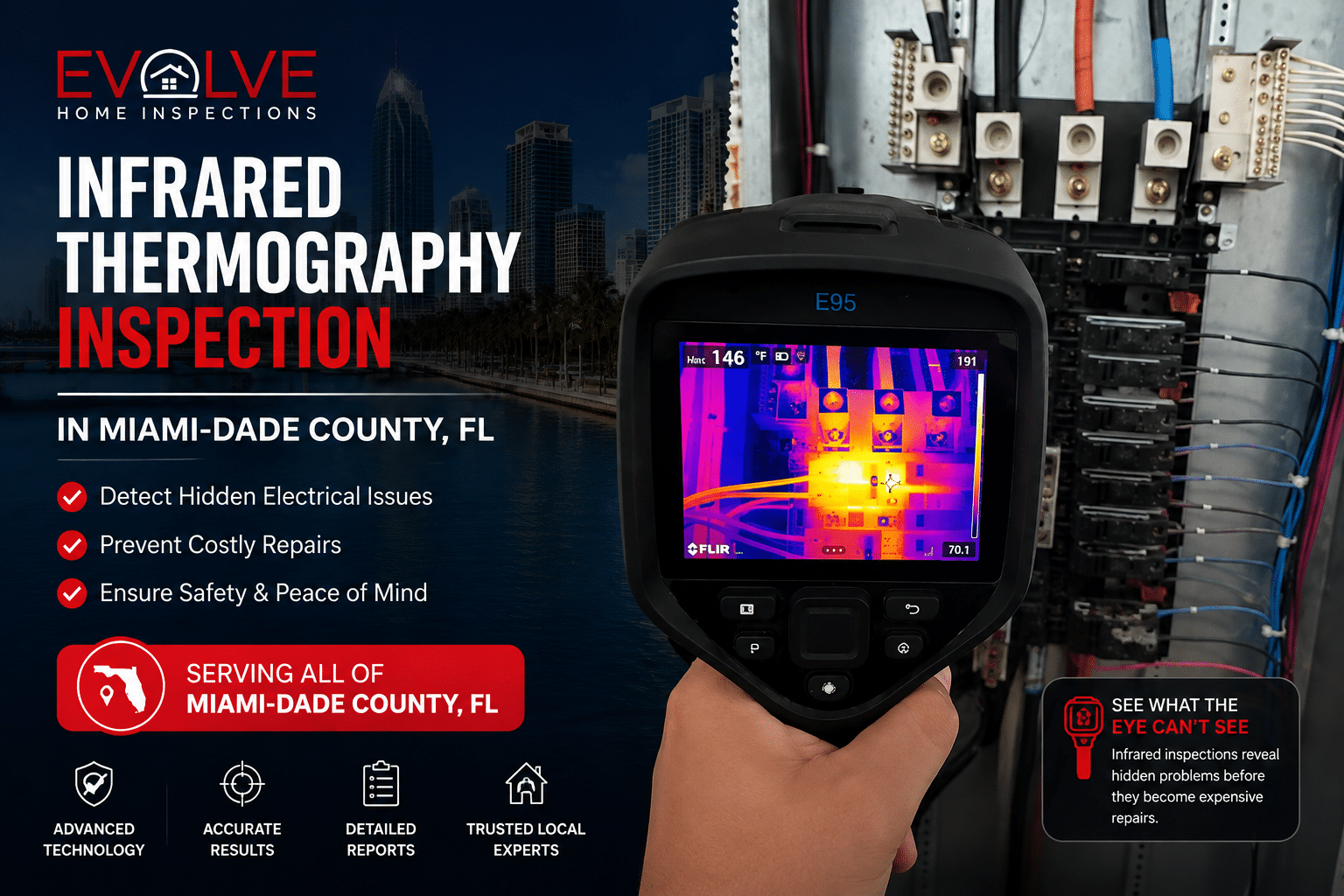
How Can Thermal Imaging Find Hidden Insulation Gaps?
Insulation helps slow heat transfer between indoor and outdoor areas. A missing or weak section changes this pattern.
During an inspection, the thermal camera captures temperature differences across a building surface. A clear temperature change may point to an area where insulation does not perform as expected.
The process can help identify:
- Missing or thin insulation in wall cavities
- Gaps around windows and doors
- Uneven insulation in attics and ceilings
- Areas where air leakage affects thermal performance
- Temperature patterns linked to construction defects
- Sections that need closer inspection or further testing
Thermal imaging is useful because it can cover large areas without destructive testing. Rather than cutting into a finished wall, an inspector can scan the surface and use the thermal pattern to guide further evaluation.
Why Are Insulation Gaps Important for Property Owners?
Insulation gaps can affect more than indoor comfort. They can change how hard an HVAC system needs to work and create uneven temperatures from one room to another. A bedroom may feel warmer than the rest of the home. One wall may feel cooler during certain weather conditions. These clues can point to differences in the building envelope.
For property owners, early knowledge helps support better repair decisions. Instead of guessing where a problem might exist, an inspection can provide visual evidence for areas that deserve closer attention.
Still, thermal imaging should not replace a full property inspection. It works best as part of a broader inspection process.
What Makes an Infrared Inspection More Reliable?
Good thermal imaging requires more than owning a thermal camera. The inspector needs training, sound judgment, and knowledge of building systems.
Evolve Property Inspections brings strong technical experience to this work. The firm is led by Humberto Suarez, whose credentials include:
- Certified Master Inspector
- CCPIA Certified Commercial Property Inspector
- Electrical Thermography Level II and Level III
- Licensed Florida Home Inspector
- Licensed Mold Assessor
- Licensed Mold Remediator
These qualifications support a careful inspection process. The goal is not to label every temperature change as a defect. Instead, the inspector looks at the full picture, considers site conditions, and explains findings in clear terms.
How Does the Inspection Support Repair Decisions?
A thermal scan can help narrow the search for hidden insulation problems. Suppose a large wall shows a distinct thermal pattern in one section. The inspector can document the finding and recommend further evaluation where needed.
Property owners can then discuss the next step with a qualified contractor. Depending on the finding, the repair might involve insulation work, air sealing, moisture investigation, or another building repair.
For owners planning upgrades, infrared thermography inspection in Miami-Dade County FL can provide useful information before work begins. A follow-up scan can help assess whether the repaired area shows a more consistent thermal pattern.
Why Choose Evolve Property Inspections?
Evolve Property Inspections takes a compliance-focused approach to property assessment. Findings receive attention based on evidence, not guesswork.
The firm works with licensed Florida Professional Engineers, who issue sealed reports when engineering review and certification are required. These reports provide a formal record for property owners who need documented professional findings.
For a property owner, this level of review adds value. You get more than a thermal picture. You receive an inspection process built around technical knowledge, proper documentation, and clear communication.
What Should Property Owners Expect During a Thermal Inspection?
Before the scan, the inspector considers conditions that could affect the results. Indoor and outdoor temperatures, HVAC operation, sunlight, wind, and access to building areas all matter.
During the inspection, the thermal camera captures surface temperature patterns. The inspector then compares areas and looks for unusual changes.
A useful report should explain what the images show, where the concern appears, and what further action may be needed. Clear documentation helps owners avoid confusion when speaking with contractors or other professionals.
Get a Closer Look at Hidden Insulation Issues
Hidden insulation gaps deserve careful attention, but property owners do not need to guess where a problem lies. Infrared thermography inspection in Miami-Dade County FL can provide useful visual evidence without opening finished surfaces.
Evolve Property Inspections combines thermography experience, property inspection knowledge, and professional engineering support to give owners a clearer view of hidden building conditions. Contact Evolve Property Inspections to schedule an inspection and take the guesswork out of your next property assessment.
FAQs
Q. Can infrared thermography detect insulation behind drywall?
Ans: Yes. Thermal imaging can show surface temperature patterns linked to changes in insulation. It does not see through drywall. An inspector interprets temperature differences to identify areas where insulation performance may need further evaluation.
Q. Does a thermal image prove an insulation gap exists?
Ans: No. A thermal image shows temperature differences, not the insulation itself. HVAC activity, moisture, sunlight, and air movement can affect results. A trained inspector reviews these factors before identifying a suspected insulation issue.
Q. Is thermal imaging safe for finished walls?
Ans: Yes. Infrared thermography is non-invasive and does not require cutting into walls. The camera records infrared energy from surfaces. Property owners can inspect finished areas without creating openings for the purpose of thermal scanning.
Q. Can thermal imaging help find attic insulation problems?
Ans: Yes. Thermal imaging can reveal uneven temperature patterns across ceilings and attic areas. These patterns can point to missing, thin, or uneven insulation and help guide closer inspection of specific sections.