When Is Infrared Thermography More Useful Than a Visual Inspection Alone?
Your eyes catch cracks, stains, and loose trim. They miss heat, damp insulation, and hot wires behind a wall. Infrared cameras fill the gap by turning heat into a picture. At Evolve Property Inspections, we use infrared thermography for building inspections in Miami, FL to spot trouble hiding in plain sight. Miami’s humidity, storms, and heavy power loads test every building. A scan reveals small issues early, so owners can nip them in the bud. Let’s look at when the camera earns its keep.
Where a Visual Inspection Runs Out of Road
A visual inspection is a solid first step. The inspector walks the property and checks the roof, walls, floors, and fixtures. Still, paint covers stains, and drywall hides pipes. A ceiling can look fine while wet insulation rests above it. Heat tells the rest of the story. Wet spots run cool, and loose wires run hot. Each shift in temperature is a clue.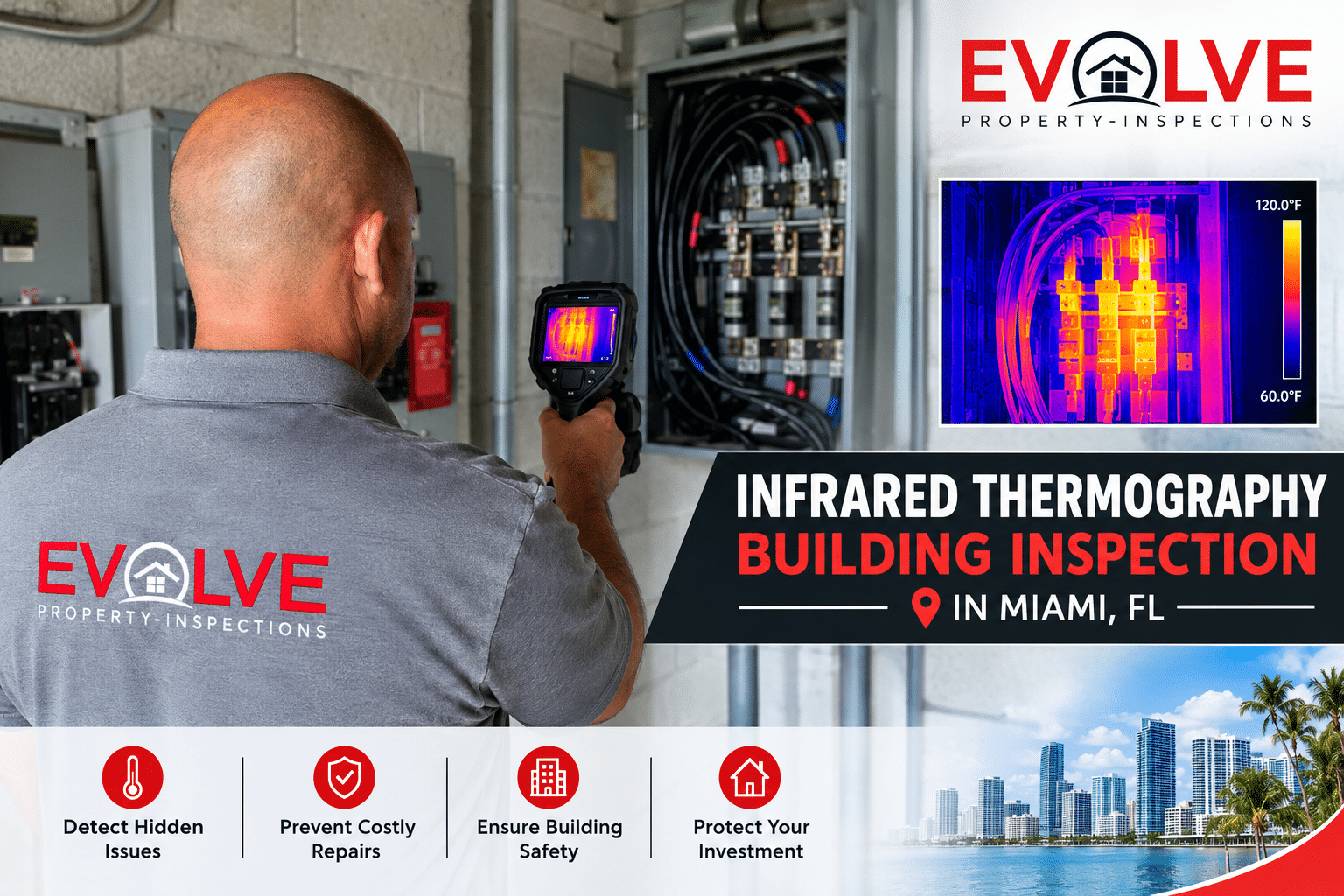
Electrical Systems Under Load
Electrical faults love to hide. A loose lug or worn breaker can look fine with the cover on. Meanwhile, heat builds inside, and heat wears parts down. An infrared thermography electrical inspection in Miami scans panels, breakers, and connections while the system runs at normal load. Hot spots show up in seconds. Then the report flags those parts for a licensed electrician to review.
Commercial owners find this handy for older switchgear, busy kitchens, and server rooms. Of course, skill matters. A trained eye reads reflections and load levels with care, so the image tells a true story.
Moisture Hunting Behind the Finish
Florida buildings face water from every angle. Roof seams, window edges, and slow pipe drips can soak materials for months while the surface stays dry. Thermography maps these spots fast. The scan shines in three places:
- Flat roofs: Wet insulation holds heat longer after sunset, so the camera draws a clear map of damp zones.
- Stucco and exterior walls: Cool patches trace water paths near windows and rooflines.
- Ceilings after storms: The image shows where water traveled, so the team can target moisture meter checks.
As a result, owners fix the right spot instead of guessing. An infrared thermography building inspection in Miami, FL, also points to the next step for mold questions.
Comfort and Energy Losses
Air leaks and thin insulation push cooling bills up. Thermography shows those gaps in minutes. Cool air escaping around a door frame glows on screen, and a bare patch in an attic wall stands out. In addition, owners plan upgrades with facts in hand. Seeing is believing, and a color image makes the case fast.
Led by Credentials You Can Count On
Experience shapes every scan. Humberto Suarez leads Evolve Property Inspections with a deep bench of training. His credentials include:
- Certified Master Inspector
- CCPIA Certified Commercial Property Inspector
- Electrical Thermography Level II and Level III
- Licensed Florida Home Inspector
- Licensed Mold Assessor
- Licensed Mold Remediator
Together, these skills let him read a thermal image with the whole building in mind. Clients who book an infrared thermography electrical inspection in Miami get Level II and Level III thermography insight behind every image.
Engineering Support When a Project Calls for It
Some projects need a deeper look. In those cases, Evolve Property Inspections coordinates with licensed Florida Professional Engineers. They can provide signed and sealed engineering documentation within the applicable scope of their services. Each report states its scope, so owners know what the inspection covers.
Ready to See What Your Walls, Roof, and Panels Hold?
Contact Evolve Property Inspections today and schedule your scan. Humberto Suarez and the team bring sharp eyes, certified skills, and a clear, calm report. Book your inspection now and take the guesswork out of your next move.