When Are Infrared Level II & III Thermography Reports Recommended for High-Rise Buildings in Miami-Dade County?
High-rise buildings shape the Miami skyline. Glass towers shine in the sun. Steel and concrete stand tall near the coast. Yet hidden heat, loose wires, and trapped moisture can cause big trouble. Building owners must stay alert. Safety rules in Florida grow stricter each year. This leads to one big question. Are infrared Level II & III thermography reports in Miami-Dade County required for high-rise buildings?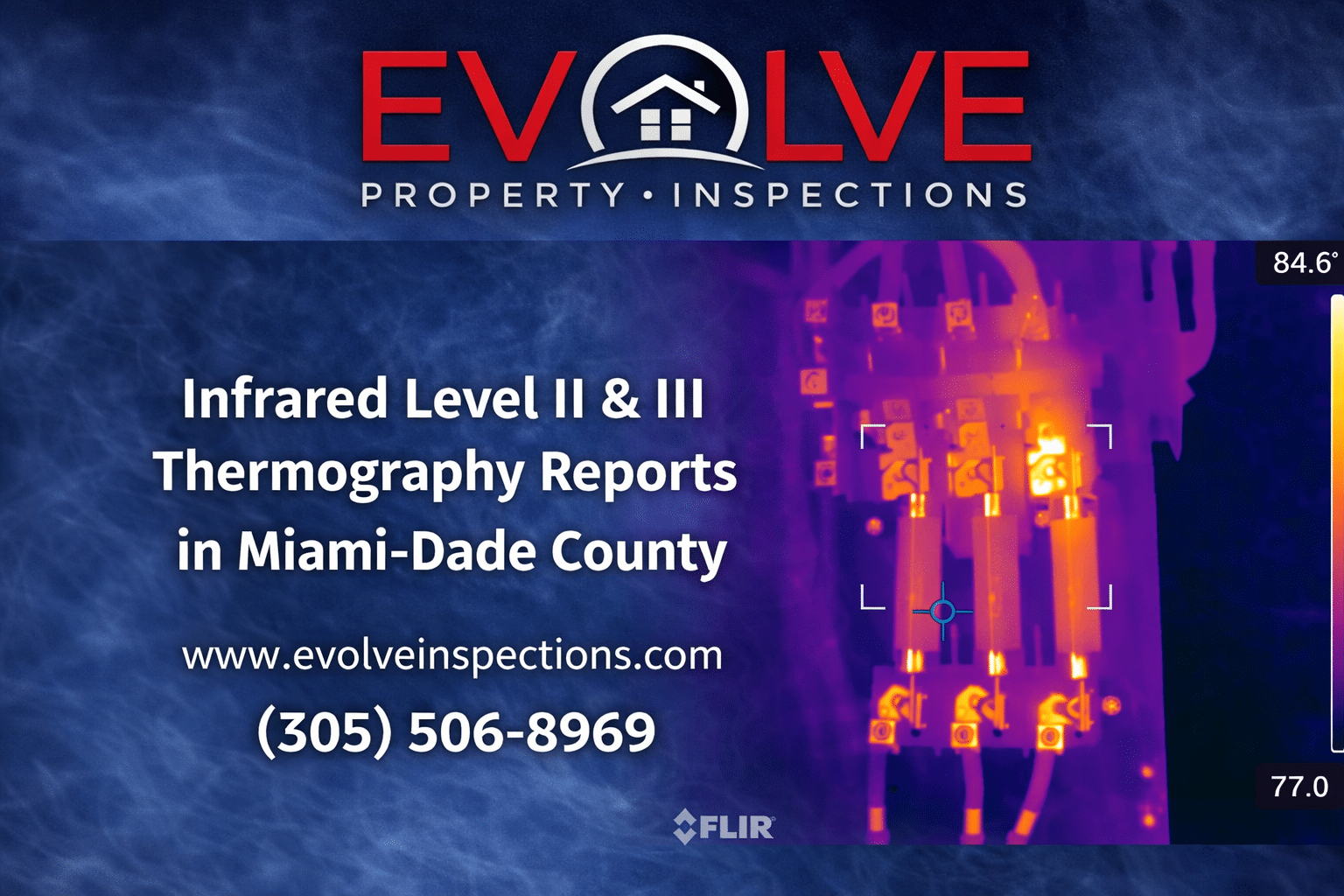
What Is Infrared Thermography?
Infrared thermography uses a special camera. It reads heat, not light. Heat shows up in colors. Hot spots glow bright. Cool areas look dark.
An infrared thermography inspection in Miami-Dade County helps inspectors see:
- Electrical hot spots
- Overloaded panels
- Hidden moisture
- Roof leaks
- HVAC issues
- Insulation gaps
These problems stay hidden from the naked eye. The camera acts like X-ray vision for buildings.
Are Level II & Level III Reports Required?
Here is the simple truth. Florida law does not say every high-rise must have infrared Level II & III thermography reports in Miami-Dade County by default. However, certain situations make them highly important and sometimes required.
When They May Be Required
- 40-Year and 50-Year Recertification: Miami-Dade County requires structural and electrical inspections for older buildings. Electrical systems must meet safety standards. Thermal imaging often supports this review.
- Insurance Requirements: Insurance carriers may request thermal imaging reports for high-rise buildings. They want proof that the electrical system works safely.
- Fire Safety Compliance: Fire marshals can request thermal scans if electrical hazards appear likely.
- Commercial Property Standards: Large commercial buildings often need higher inspection levels for risk management.
While not always specifically required, advanced infrared thermography is frequently recommended for high-rise buildings to evaluate building envelope performance, moisture intrusion, and electrical system conditions.
Why Level II and Level III Matter?
Not all thermography reports carry the same weight.
Level II Thermography
A Level II thermographer can:
- Perform detailed thermal scans
- Analyze temperature differences
- Identify electrical faults
- Provide technical reports
This level works well for most high-rise inspections.
Level III Thermography
Level III is the top tier. It includes:
- Advanced data analysis
- Complex system evaluation
- Program development
- Expert witness services
High-rise buildings with large electrical systems often benefit from Level III review.
When counties or insurers demand professional documentation, they prefer certified experts. This is where infrared Level II & III thermography reports in Miami-Dade County gain value.
Why High-Rise Buildings Face Higher Risk?
Tall buildings carry more electrical load. Elevators, chillers, fire pumps, and lighting systems run daily. Heavy power flow increases heat.
Heat creates:
- Loose wire connections
- Arc faults
- Melted insulation
- Fire risk
An infrared thermography inspection in Miami-Dade County spots these hot spots early. Early detection saves money and lives.
Plus, coastal air adds salt exposure. Salt speeds corrosion. Corrosion increases resistance. Resistance builds heat. It becomes a chain reaction.
Why Choose Evolve Property Inspections?
Evolve Property Inspections stands out in Miami-Dade County. The company is led by Humberto Suarez. His credentials speak loud and clear:
Certified Master Inspector
CCPIA Certified Commercial Property Inspector
Electrical Thermography Level II & Level III
Licensed Florida Home Inspector
Licensed Mold Assessor
Licensed Mold Remediator
This mix of licenses offers full protection. Electrical safety, moisture issues, and structural concerns connect closely in high-rise buildings.
Evolve uses advanced thermal cameras. Reports are clear and easy to read. Clients receive images, temperature readings, and expert analysis. No guesswork. Just facts.
If your property needs infrared Level II & III thermography reports in Miami-Dade County, working with a certified Level II and Level III thermographer makes sense.
What Happens During the Inspection?
The process stays simple.
- The inspector scans electrical panels and systems.
- Thermal images capture heat patterns.
- Problem areas get marked and documented.
- A full report explains findings.
An infrared thermography inspection in Miami-Dade County does not damage walls. It stays non-invasive. The process moves fast and does not disrupt residents.
Why Waiting Is Risky?
Electrical fires often start small. A loose connection builds heat over time. You will not see it. You will not smell it. Then one day, sparks fly.
Routine infrared Level II & III thermography reports in Miami-Dade County reduce this risk. They help building owners plan repairs before disaster hits.
Think of it like a health check for your building. Small fixes cost less than big repairs.
Protect Your High-Rise Investment Today
High-rise buildings demand serious care. Electrical safety should never become an afterthought. If you manage or own a tower in Miami-Dade County, now is the time to act.
Evolve Property Inspections delivers trusted infrared thermography inspection services in Miami-Dade County, backed by Level II and Level III certification. Humberto Suarez brings experience, skill, and sharp eyes to every project.
Do not wait for sparks to fly. Schedule your inspection today and keep your building safe, strong, and compliant.
Evolve Property Inspections — Inspecting Your American Dream.
FAQs
Q1. Are infrared thermography inspections required for all high-rise buildings in Miami-Dade County?
Ans: Not every high-rise must complete thermal imaging by law. However, recertification rules, insurance policies, and fire safety concerns often trigger the need. Many property managers choose inspections to reduce liability and prevent electrical hazards before they grow into serious safety problems.
Q2. What makes Level II and Level III thermographers different?
Ans: Level II thermographers analyze heat patterns and identify system faults. Level III professionals hold advanced training and manage complex thermal programs. They review difficult cases and provide expert-level reporting. High-rise properties benefit from Level III expertise when large electrical systems require detailed evaluation.
Q3. How often should a high-rise building schedule thermography inspections?
Ans: Industry standards suggest annual electrical thermal scans for commercial and high-rise properties. Buildings with heavy electrical loads may require more frequent inspections. Regular monitoring reduces fire risk and supports insurance compliance while extending the life of electrical components.
Q4. Can infrared thermography detect moisture and mold risks?
Ans: Yes. Thermal imaging identifies temperature differences caused by hidden moisture. Water intrusion often leads to mold growth. When paired with a licensed mold assessor like Humberto Suarez, building owners receive deeper insight into both electrical and moisture-related concerns.
Q5. How long does an infrared thermography inspection take?
Ans: Inspection time depends on building size and system complexity. Smaller buildings may take a few hours. Large high-rise properties can require a full day. The process remains non-invasive and does not interrupt daily operations for residents or tenants.