Home / Blog / How Do Infrared Inspections Help Reduce Risk in High-Load Electrical Systems?
How Do Infrared Inspections Help Reduce Risk in High-Load Electrical Systems?
Posted on
High-load electrical systems work hard every single day. They power large buildings, support critical operations, and keep people safe and productive. Still, when these systems start to struggle, the warning signs are often quiet. Heat builds up. Connections loosen. Components wear down over time. That is where infrared inspections step in and truly make a difference.
With Thermography in Miami-Dade County, we help property owners, managers, and engineers spot electrical risks early, before they turn into downtime, damage, or serious safety concerns. At Evolve Property Inspections, our inspections are led by Humberto Suarez, Certified Master Inspector (CMI), CCPIA, Certified Level II Thermographer, bringing experience and clarity to every evaluation.
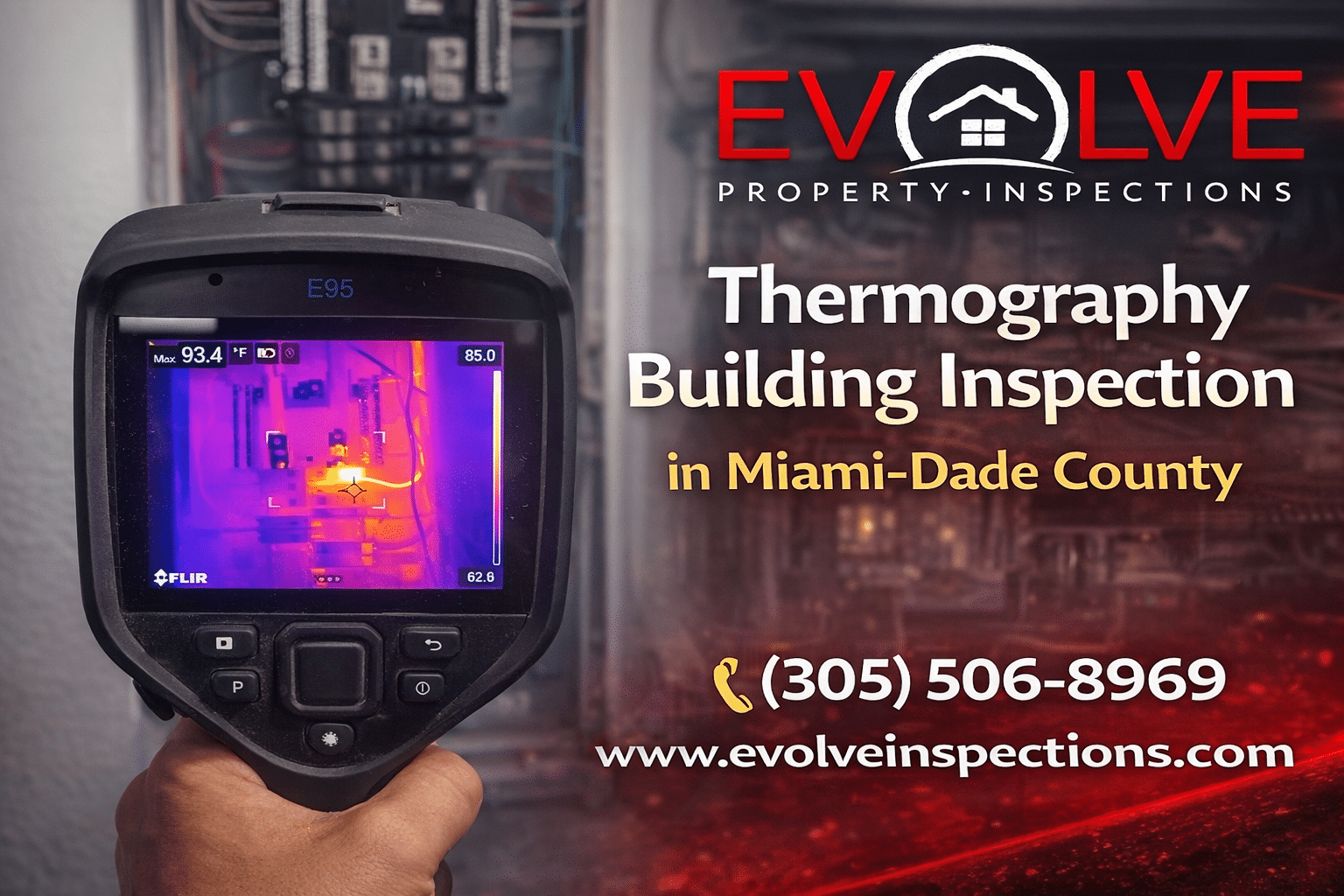
We use infrared thermal imaging to help identify overheating electrical components and moisture concerns that are not visible during standard inspections.
Electrical systems handling high loads are under constant pressure. Panels, breakers, and connections often operate close to their limits for long periods. Over time, that strain can cause overheating, weakened components, and unsafe conditions.
The real challenge is that most of these problems cannot be seen with the naked eye. Wires usually do not spark or fail right away. Instead, heat slowly damages insulation and internal parts. By the time lights flicker or breakers trip, the issue is already advanced.
That is why proactive inspections matter so much in high-load environments. Infrared inspections help catch problems early, when fixes are still manageable and far less disruptive.
What Infrared Thermography Actually Does
Infrared thermography uses specialized thermal cameras to detect temperature differences across electrical components. These temperature patterns tell a clear story. Hot spots often point to loose connections, overloaded circuits, failing breakers, or uneven electrical loads.
Rather than relying on guesswork, we rely on data. A Thermography Building Inspection in Miami-Dade County allows us to safely scan live electrical systems while they are operating under normal conditions. This is critical because many electrical issues only appear when systems are under load.
The process is non-invasive, efficient, and does not require shutting down power. That makes it a practical solution for busy buildings that cannot afford interruptions.
How Thermography Reduces Electrical Failure Risk
Infrared inspections reduce risk by catching problems before they turn into failures. Early detection is the biggest advantage.
Here are a few ways thermography helps protect high-load systems:
Identifies overheating components before they fail
Detects loose, corroded, or deteriorating connections
Highlights overloaded circuits and imbalanced loads
Supports smarter maintenance planning using real data
Reduces unexpected outages and emergency repairs
When issues are found early, repairs can be scheduled instead of rushed. That alone makes a big difference in cost control and safety.
Preventing Downtime in Critical Facilities
Downtime rarely comes alone. It often brings lost productivity, displaced occupants, and frustrated teams along with it. In commercial and multi-unit buildings, electrical failures can also create liability and safety risks.
Thermography inspections help reduce these risks. Since systems stay energized during scanning, problems can be identified without interrupting daily operations. This makes infrared inspections ideal for facilities that need to stay online at all times.
With Thermography in Miami-Dade County, many property owners use infrared inspections as part of a routine maintenance strategy instead of waiting for warning signs to appear.
Supporting Electrical Safety and Insurance Requirements
High-load electrical systems are often tied to insurance, safety, and compliance requirements. Insurers and stakeholders want proof that systems are being monitored and maintained responsibly.
A Thermography Building Inspection in Miami-Dade County provides clear documentation of system conditions at a specific point in time. Thermal images and written reports help show that proactive steps are being taken to manage risk.
While thermography does not replace electrical testing or repairs, it adds a powerful layer of insight that strengthens overall safety planning.
Why Experience Matters With Infrared Inspections
Thermal cameras alone do not solve problems. The real value comes from knowing how to interpret what the images reveal. Heat patterns can have different causes, and not every hot spot means the same thing.
At Evolve Property Inspections, experience plays a major role. We focus on accuracy and clear explanations. We explain what the findings mean, why they matter, and what steps should be considered next.
There is no alarmist language and no vague conclusions. That clarity helps property teams make informed decisions without second guessing.
Where Infrared Inspections Add the Most Value
Infrared inspections are especially useful in environments with steady or heavy electrical demand. These include commercial buildings, multi-family properties, and facilities with older infrastructure.
In these settings, thermography helps teams stay ahead of wear and tear. It also supports long-term planning rather than short-term fixes. When inspections are done regularly, problems are tracked over time instead of ignored until failure occurs.
This approach turns thermography into a smart risk management tool rather than a last-minute response.
Making Smarter Maintenance Decisions
One of the biggest benefits of infrared inspections is better planning. Instead of replacing parts based on guesswork, maintenance teams can prioritize based on actual conditions.
Thermal data helps answer important questions:
Which components need attention now
Which issues can be monitored over time
Where maintenance budgets should be focused first
This leads to fewer surprises, lower repair costs, and more reliable electrical systems overall.
Why Local Knowledge Matters in Miami-Dade County
Electrical systems in South Florida face unique challenges. Heat, humidity, salt air, and long run times all speed up wear and corrosion.
Our experience with Thermography in Miami-Dade County helps us understand how these local conditions impact electrical performance. That insight allows us to identify risks others might overlook and provide recommendations that make sense for this environment.
Q. What does an infrared electrical inspection detect? Ans: It detects abnormal heat patterns that may indicate loose connections, overloads, or failing electrical components.
Q. Is thermography safe for live electrical systems? Ans: Yes. Inspections are performed on energized systems without physical contact or shutdowns.
Q. Does thermography replace electrical testing? Ans: No. It complements other evaluations by adding a heat-based visual layer of information.
Q. Who benefits most from infrared inspections? Ans: Commercial buildings, multi-unit properties, and facilities with high electrical demand benefit the most.
Q. How often should infrared inspections be performed? Ans: Many properties schedule them annually or as part of ongoing maintenance programs.
Take a Proactive Approach to Electrical Risk
Electrical failures rarely happen overnight. They build quietly over time, often hidden from view. Infrared inspections help bring those risks to light early, when action is still simple and affordable.
If you manage high-load electrical systems and want clearer insight, Evolve Property Inspections is ready to help. Our thermography services deliver practical findings you can actually use.
Connect withEvolve Property Inspections today to schedule your infrared inspection and take control of electrical risk before it turns costly.