Can Infrared Thermography Reduce Repair Costs for Miami Property Owners?
A building gives warning signs long before major damage appears. Heat trapped behind walls, moisture under flooring, and stressed electrical systems leave thermal patterns invisible to the human eye. Infrared thermography building inspection in Miami helps property owners uncover these hidden conditions early, before repair costs grow into major construction work.
In South Florida, constant humidity, driving rain, salt air, and heavy HVAC use place buildings under year-round pressure. Thermal imaging gives owners a practical way to track building health, limit risk, and make smarter maintenance decisions without cutting into walls or removing materials.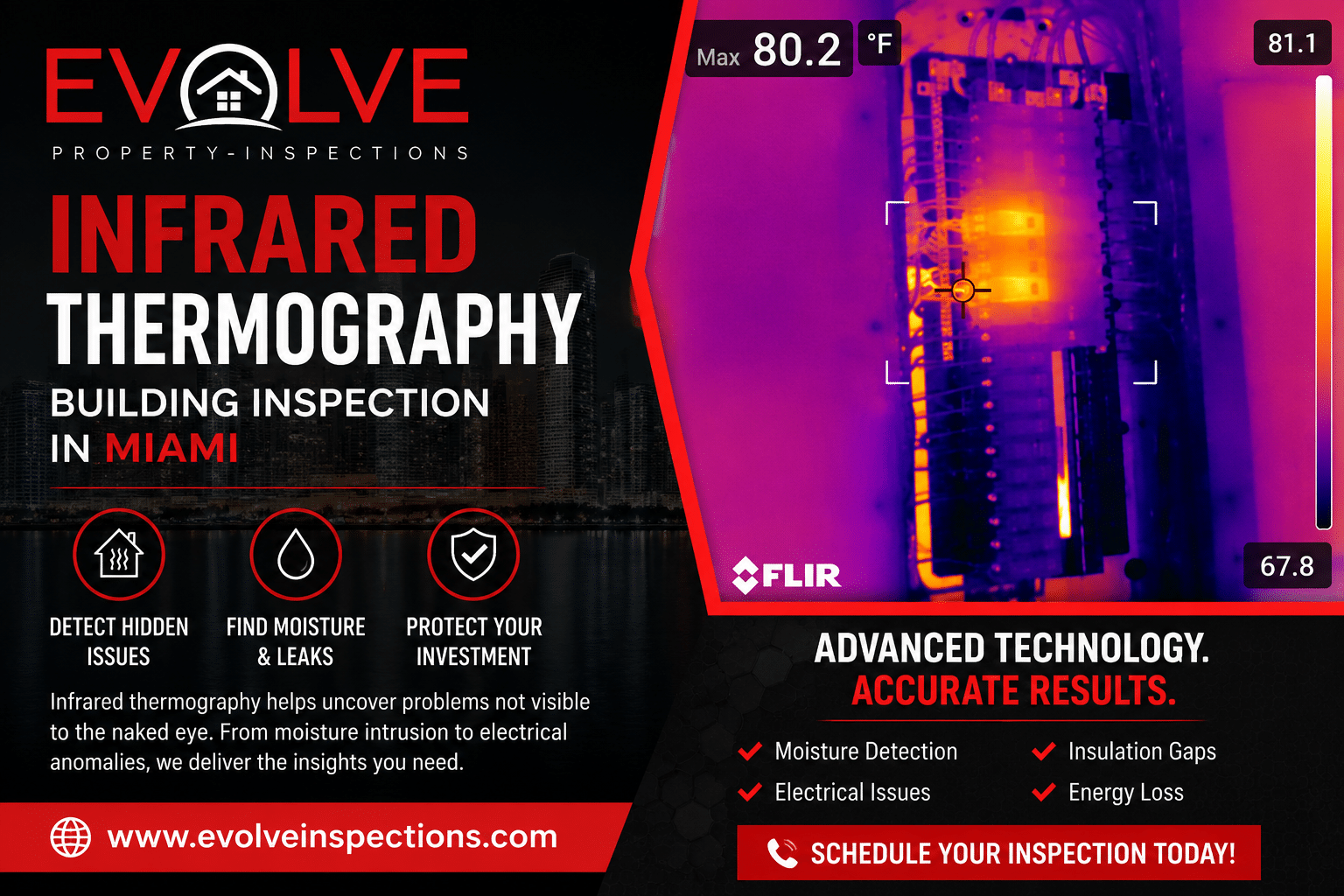
Why Infrared Thermography Has Become Essential in Miami
Miami properties face challenges that few other regions experience at the same level. Roof systems absorb intense heat daily. Wind-driven rain pushes moisture into weak building areas. Air conditioning systems run hard for most of the year. Over time, these conditions create hidden failures inside structures.
Infrared thermography allows inspectors to identify temperature differences linked to moisture intrusion, electrical resistance, insulation gaps, and air leakage. A trained thermographer does more than capture thermal images. Proper interpretation requires knowledge of construction systems, moisture behavior, electrical load patterns, and environmental conditions.
Evolve Property Inspections approaches thermal imaging with a building science mindset, not a checklist mentality. The firm evaluates how systems interact in real-world conditions across residential, commercial, and mixed-use properties throughout South Florida.
Hidden Problems Thermal Imaging Can Reveal
A standard visual inspection can miss conditions developing beneath finished surfaces. Thermal imaging adds another layer of investigation by exposing anomalies invisible during routine walkthroughs.
Common findings during thermal inspections include:
- Moisture intrusion behind stucco, drywall, or flooring
- Roof leaks trapped beneath membrane systems
- Electrical hot spots inside panels and disconnects
- Overheated breakers and loose wire connections
- HVAC airflow loss and duct leakage
- Insulation voids causing energy inefficiency
- Water intrusion around windows and balconies
In coastal Miami properties, water intrusion rarely stays isolated. Moisture can migrate through framing cavities, affect insulation performance, and create concealed mold conditions long before stains appear on surfaces. Thermal imaging helps narrow the source area with precision, reducing unnecessary demolition and exploratory work.
Electrical scanning also plays a major role in preventive maintenance. During inspections, thermal cameras can identify overloaded circuits, imbalanced loads, and abnormal heat signatures inside energized equipment. These findings help owners address developing issues before equipment failure interrupts operations or creates safety concerns.
How Infrared Thermography Helps Reduce Repair Costs
The biggest financial advantage of thermal imaging comes from timing. Problems discovered early cost less to correct. Small deficiencies become expensive repairs when hidden conditions continue unchecked for months.
Moisture Detection Before Structural Damage Spreads
A slow roof leak may travel across multiple building components before becoming visible indoors. By the time staining appears, moisture may already exist inside insulation, framing, or flooring systems. Thermal imaging helps isolate affected areas sooner, allowing targeted repairs instead of large-scale restoration work.
Smarter Electrical Risk Management
Electrical defects generate heat before failure occurs. Loose lugs, overloaded conductors, and failing breakers produce thermal signatures detectable during infrared scanning. Property owners can schedule repairs during planned maintenance instead of facing emergency shutdowns or equipment replacement.
Improved Energy Performance
Buildings losing conditioned air force HVAC systems to work harder. In Miami’s climate, inefficient cooling directly impacts operating costs. Infrared inspections help locate missing insulation, duct leakage, and thermal bridging affecting indoor performance.
Reduced Destructive Investigation
Without thermal imaging, contractors may remove large sections of drywall or roofing to locate hidden issues. Thermal technology narrows the search area, reducing labor costs and minimizing disruption to occupants or tenants.
Technical Expertise Matters More Than Equipment
Owning a thermal camera does not make someone qualified to interpret building conditions. Accurate thermal analysis depends on training, field experience, and understanding how environmental factors affect readings.
Evolve Property Inspections is led by Humberto Suarez, whose credentials reflect advanced technical specialization across multiple inspection disciplines:
- Certified Master Inspector
- CCPIA Certified Commercial Property Inspector
- Electrical Thermography Level II and Level III
- Licensed Florida Home Inspector
- Licensed Mold Assessor
- Licensed Mold Remediator
This combination of qualifications allows the firm to connect thermal findings with real building performance issues. During inspections, thermal patterns are evaluated alongside moisture readings, electrical conditions, ventilation performance, and structural observations. Clients receive analysis grounded in practical field knowledge, not generic software-generated summaries.
Sealed reports are also issued by licensed Florida Professional Engineers working with the firm. This added level of professional oversight supports commercial property evaluations, insurance documentation, reserve studies, and due diligence investigations.
Applications for Residential and Commercial Properties
Thermal imaging serves a wide range of property types across South Florida. Homeowners use Infrared thermography building inspection in Miami, FL before purchasing older homes, after storm events, or when unexplained moisture issues appear indoors.
Commercial property owners use thermal inspections to support preventive maintenance planning, evaluate roof conditions, and assess electrical systems under load. Condo associations also benefit from thermal surveys during reserve planning and water intrusion investigations.
In aging Miami buildings, hidden deficiencies can remain concealed behind finishes for years. Infrared thermography gives owners a non-invasive method to evaluate building conditions with greater clarity and less disruption.
Why Property Owners Trust Evolve Property Inspections
Evolve Property Inspections has built a reputation for detailed evaluations, technical accuracy, and professional reporting. The firm combines advanced infrared imaging technology with real inspection experience across South Florida’s demanding building environment.
Clients receive practical findings explained in clear language. Reports focus on actionable information instead of vague observations. Each inspection is performed with attention to safety, compliance standards, and long-term property performance.
Property owners searching for dependable Infrared thermography building inspection in Miami value Evolve Property Inspections for its engineering-backed approach and deep understanding of building systems exposed to South Florida conditions.
Schedule a Professional Infrared Building Inspection
Hidden issues rarely improve with time. Moisture intrusion, electrical stress, and energy loss can quietly increase repair costs across residential and commercial properties. Evolve Property Inspections delivers detailed Infrared thermography building inspections in Miami, FL, designed to help property owners make informed decisions with confidence.
Contact Evolve Property Inspections today to schedule a professional thermal imaging assessment backed by technical expertise, advanced diagnostics, and engineering-level reporting.
FAQs
1. What does infrared thermography detect during an inspection?
Infrared thermography identifies temperature variations linked to moisture intrusion, electrical defects, insulation gaps, and HVAC performance issues. Thermal cameras reveal hidden conditions inside walls, ceilings, roofing systems, and electrical components without damaging building materials during the inspection process.
2. Can infrared imaging help prevent expensive repairs?
Yes. Thermal imaging helps detect developing problems before visible damage appears. Early identification allows property owners to repair isolated issues before moisture spreads, electrical systems fail, or hidden deterioration affects larger portions of the building structure.
3. Is thermal imaging useful for commercial properties?
Commercial buildings benefit greatly from infrared inspections. Thermal surveys help evaluate electrical systems, roofing assemblies, moisture intrusion, and energy loss. Property managers and investors use these inspections to support maintenance planning, reduce operational risks, and improve long-term asset protection.
4. Why is professional experience important in thermal inspections?
Thermal cameras only capture surface temperature differences. Proper interpretation requires knowledge of building systems, environmental conditions, and moisture behavior. Experienced inspectors understand how to distinguish true defects from misleading thermal patterns caused by weather, materials, or reflective surfaces.
5. Why choose Evolve Property Inspections for infrared services?
Evolve Property Inspections combines advanced thermography training, building science knowledge, and engineering-supported reporting. Humberto Suarez brings multiple industry credentials, including Electrical Thermography Level I and II certifications, while licensed Florida Professional Engineers working with the firm issue sealed reports for qualified projects.