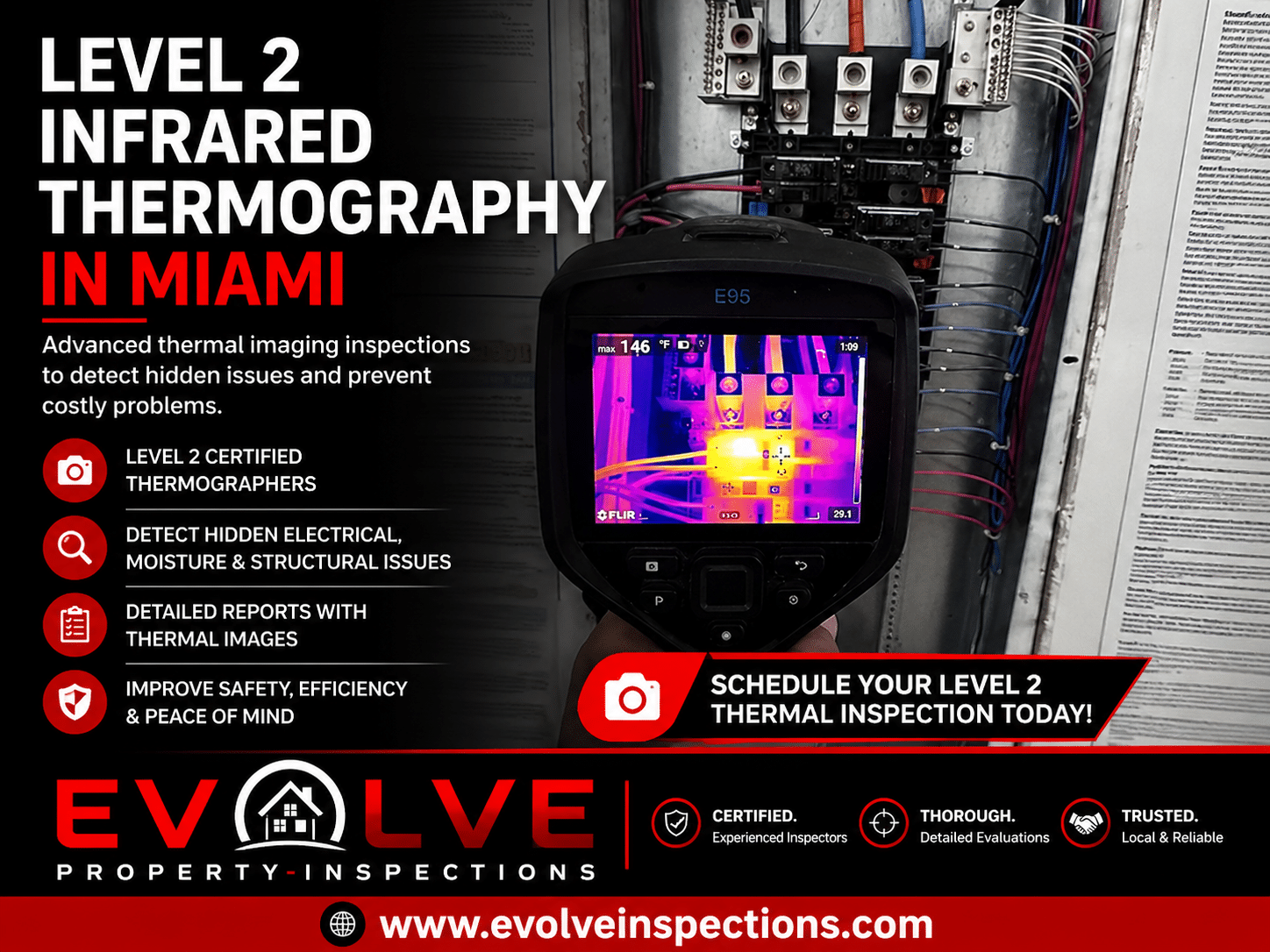
Level II Infrared Thermography

What Makes Level 2 Infrared Thermography in Miami Essential for Accurate Building Diagnostics?

Heat tells a story. Walls, wires, and roofs hold clues you cannot see with the eye. Smart inspections read those clues and stop small issues from turning big. Evolve Property Inspections uses Level 2 Infrared Thermography in Miami to find hidden trouble with clear proof. This method gives sharp data, not guesswork. It helps owners, buyers, and managers feel sure about their next move.

What Is Level 2 Infrared Thermography?

Infrared thermography reads heat patterns on surfaces. A trained inspector uses a thermal camera to spot hot and cold areas. These patterns show issues like loose wires, wet insulation, or air leaks.

Level 2 goes deeper. It is not just about taking images. It includes analysis, proper settings, and sound judgment. A technician with Level 2 thermography certification in Miami knows how to tune the camera, set the right scale, and read results with care. This skill cuts false alarms and gives clear answers.

Why Level 2 Matters for Real Diagnostics

Basic scans can miss context. Level 2 work brings structure and proof. It follows strict methods and checks each finding with logic and field tests. You get data you can act on.

Here is what sets it apart:

  • Higher accuracy
    The inspector adjusts emissivity, distance, and reflected temp. This leads to clean images and solid readings.
  • Clear root cause analysis
    The report links patterns to real faults. It separates surface noise from real risk.
  • Code and safety alignment
    Findings align with accepted standards. This helps with audits, insurance, and compliance.
  • Actionable reports
    You get steps to fix issues, not just pictures.

Where It Helps in Miami Buildings

Miami brings heat, salt air, and storms. Buildings face stress all year. Infrared testing fits this climate well. It spots trouble early and saves time.

Use cases include:

  • Electrical systems
    Loose lugs, overloads, and bad breakers show as hot spots. Early repair prevents outages and fire risk.
  • Moisture intrusion
    Wet areas change surface temperature. The camera flags roof leaks, wall moisture, and hidden damp zones.
  • HVAC performance
    Blocked ducts, poor flow, and failing parts show uneven heat. This guides quick fixes.
  • Envelope defects
    Gaps in insulation and air leaks show cold or warm streaks. This improves comfort and energy use.

Compliance and Documentation You Can Trust

Strong reports matter. Lenders, insurers, and boards want proof. With Level 2 Infrared Thermography in Miami, documentation meets a high bar.

Evolve Property Inspections issues sealed reports by licensed Florida Professional Engineers working with the firm. Each report includes thermal images, standard photos, field notes, and clear conclusions. This format supports permit closeouts, reserve planning, and due diligence.

Leadership and Credentials You Can Rely On

Evolve Property Inspections is led by Humberto Suarez. His background supports careful, code-aware inspections. Credentials include:

  • Certified Master Inspector
  • CCPIA Certified Commercial Property Inspector
  • Electrical Thermography Level II and Level II
  • Licensed Florida Home Inspector
  • Licensed Mold Assessor
  • Licensed Mold Remediator

This mix covers structure, systems, and indoor health. It brings a full view of building condition, not a narrow check.

How the Process Works

The workflow is simple and clear. First, the team reviews the scope and building plans. Next, they set up the camera with proper parameters. Then they scan target areas and capture images. After that, they verify findings with tools and site checks. Finally, they deliver a sealed report with steps to fix issues.

When Should You Schedule a Scan?

Plan a scan during key moments. Before a purchase helps avoid bad surprises. During ownership helps track system health. After repairs confirms work quality. Annual checks support maintenance plans. If you see high bills, musty smells, or tripped breakers, a scan gives fast answers.

Why Clients Choose Evolve

Clients want clarity, not noise. They want proof, not guesses. With Level 2 thermography certification in Miami, the team brings skill and discipline to each job. We speak in plain words, show clean images, and guide next steps. You get a plan you can trust.

Final Thoughts

Infrared thermography is not a fancy add-on. It is a core diagnostic tool. Level 2 work raises the bar with better data and better decisions. In a place like Miami, this edge pays off.

Ready to See What Your Building Is Hiding?

Book a scan with Evolve Property Inspections and get clear, sealed findings you can act on. Reach out today to schedule Level 2 Infrared Thermography in Miami and move forward with confidence.

FAQs

Q. What does a Level 2 thermography inspection include?
Ans. A Level 2 inspection includes calibrated thermal imaging, on-site verification, and detailed analysis. The inspector sets correct parameters, captures images, and confirms findings with tools. The final report explains each issue, shows images, and lists steps for repair in a clear format.

Q. How is Level 2 different from a basic thermal scan?
Ans. Level 2 involves deeper training and strict methods. It focuses on accuracy and root cause, not just image capture. The inspector adjusts settings and validates results. This reduces false readings and provides reliable data for repairs, budgeting, and compliance needs.

Q. Are the reports accepted for compliance and insurance?
Ans. Yes. Reports are sealed by licensed Florida Professional Engineers working with the firm. They include thermal images, photos, notes, and conclusions. This structure supports inspections, claims, and due diligence. It gives stakeholders clear, defensible documentation.

Q. Can thermography detect moisture behind walls or roofs?
Ans. Yes. Moisture changes surface temperature. Thermal cameras pick up those shifts and flag suspect areas. The inspector then verifies with field checks. This helps locate leaks, damp insulation, and hidden water paths without opening large sections.

Q. How long does an inspection take and when should I book one?
Ans. Time depends on size and scope, from a few hours to a full day. Book before purchase, after repairs, or as part of routine maintenance. If you notice high energy use, odd smells, or electrical issues, schedule a scan for quick insight.


Humberto Suarez

Recent Posts

How Has Building Recertification in Miami-Dade Changed After Recent Safety Laws?

Safety rules in Miami-Dade now carry more weight than ever. Building owners feel the shift.…

1 day ago

Can Wind Mitigation Inspections in Miami-Dade County Really Lower Your Premiums?

Storm season brings a real test for homes across South Florida. Strong winds can hit…

2 days ago

What Is a Roof Certification Inspection in Miami-Dade County, and Why Do You Need One?

A strong roof keeps your home safe from sun, rain, and storms. Still, age and…

3 days ago

What Red Flags Can a Home Inspection Company in Pinecrest Identify in Older Homes?

Older homes carry charm, history, and unique design. Still, age brings wear, hidden damage, and…

3 days ago

What Are the Differences Between 50 Year Building Recertification and Regular Inspections?

Buildings age just like people. Small cracks, worn wires, and tired systems start to show…

1 month ago

What Does a Condo Structural Inspection Reveal About Your Property’s Safety?

A condo may look strong from the outside. Still, hidden issues can sit behind walls,…

1 month ago